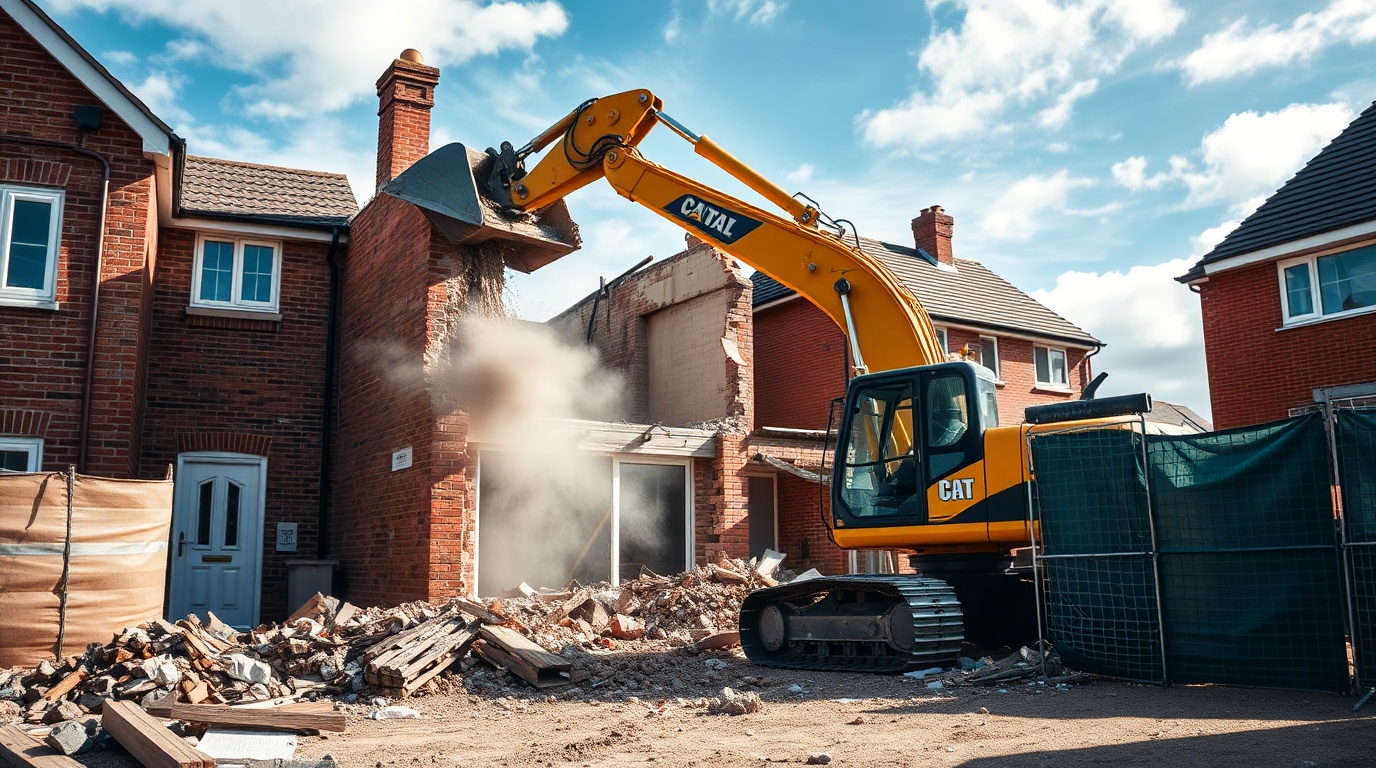
The short answer
In most cases you can demolish your own domestic garage in the UK, provided it is done safely and any waste, services and asbestos are handled correctly. A typical small detached garage usually does not require planning permission to remove, but for larger demolitions you may need to give notice to your local authority's building control before starting, and there are exceptions in conservation areas and for listed buildings. The main practical risks are the building coming down in an uncontrolled way, an asbestos roof that needs special handling, and disposing of heavy waste properly. This page is general information, not legal advice; checking the rules that apply to your property with your local authority before you start is the sensible first step.
Taking down your own garage is often allowed, but a few legal, safety and waste points decide whether it is wise to do it yourself. The sections below set out what to check.
Key points
- Small detached garageUsually no planning permission
- Larger demolitionsMay need building control notice
- Conservation/listedSpecial rules apply
- Asbestos roofHandle separately, don't smash
- WasteDispose of legally, not fly-tip
The rules: planning and building control
Demolition and planning permission are two different things. Removing a typical detached domestic garage generally does not need planning permission, because you are taking something away rather than building. However, larger demolitions can fall under separate rules that require you to notify building control at your local authority before work begins, so they can confirm any conditions about safety, services and making good. The threshold and process vary, which is why a quick check with your council is worthwhile.
There are important exceptions. If your property is in a conservation area or is a listed building, additional consents may be required even for a garage, and removing something without the right permission can cause problems. Shared boundaries can also bring the Party Wall etc. Act into play if the garage adjoins a neighbour. This is general guidance only; your local authority can confirm what applies to you.
Safety and the asbestos question
The biggest practical reason people use a contractor is that demolition is hazardous. A garage must be taken down in a controlled sequence so it does not collapse unpredictably, and heavy roof sections, lintels and walls can injure if they fall the wrong way. Protective equipment, a clear working area and a sensible method are all important if you do the work yourself.
The single most important safety check is the roof and panels. Many garages built from the 1950s to the 1980s have asbestos cement roof sheets. These must never be smashed, drilled or broken up. Under HSE guidance, asbestos cement is generally lower-risk non-licensed work, but it still has to be removed intact where possible, kept damp, double-wrapped and disposed of at a licensed site. If you are not confident identifying or handling it, this part is best left to someone experienced.
| Consideration | DIY-friendly? | Notes |
|---|---|---|
| Lightweight prefab garage | Often | Unbolts in panels |
| Brick/block garage | Sometimes | Heavy, needs care |
| Asbestos roof present | Caution | Specialist handling |
| Attached to house | Caution | Protect the retained wall |
General guidance only. Source: HSE asbestos guidance and council demolition information.
Waste, services and making good
If you do the work yourself, you are responsible for the waste. Brick, block and concrete are heavy and must be disposed of legally, typically via a skip or a registered waste carrier, not fly-tipped, which is an offence. Asbestos waste, if any, goes to a licensed site with the correct documentation. Before demolition, any electricity, water or gas supply to the garage should be safely disconnected by a competent person.
Finally, plan for the base and the aftermath. Decide whether you are removing the concrete slab or keeping it, and how you will make good the ground or any wall left behind. Weighing all of this up, a simple lightweight garage with no asbestos and good access is a realistic DIY job for a capable person, while a brick garage, an asbestos roof, or an attached structure is where many homeowners decide a contractor is the safer choice.
Frequently asked questions
Do I need permission to demolish my own garage?
A typical detached domestic garage usually does not need planning permission, but larger demolitions can require notice to building control, and conservation areas and listed buildings have extra rules. Check with your local authority before starting. This is general guidance, not legal advice.
What about an asbestos garage roof if I do it myself?
Asbestos cement roof sheets must not be smashed or drilled. They are generally non-licensed work under HSE guidance but still need careful, intact removal, damping down, double-wrapping and licensed disposal. If unsure, use an experienced contractor for that part.
How do I dispose of the waste legally?
Brick, block and concrete must go to a skip or a registered waste carrier, never fly-tipped, which is an offence. Any asbestos waste must go to a licensed site with the correct paperwork. Keep evidence of legal disposal.
Sources & further reading
Figures on this page are typical UK ranges drawn from published sources and depend on your specific building. They are guidance, not a quotation.