The short answer
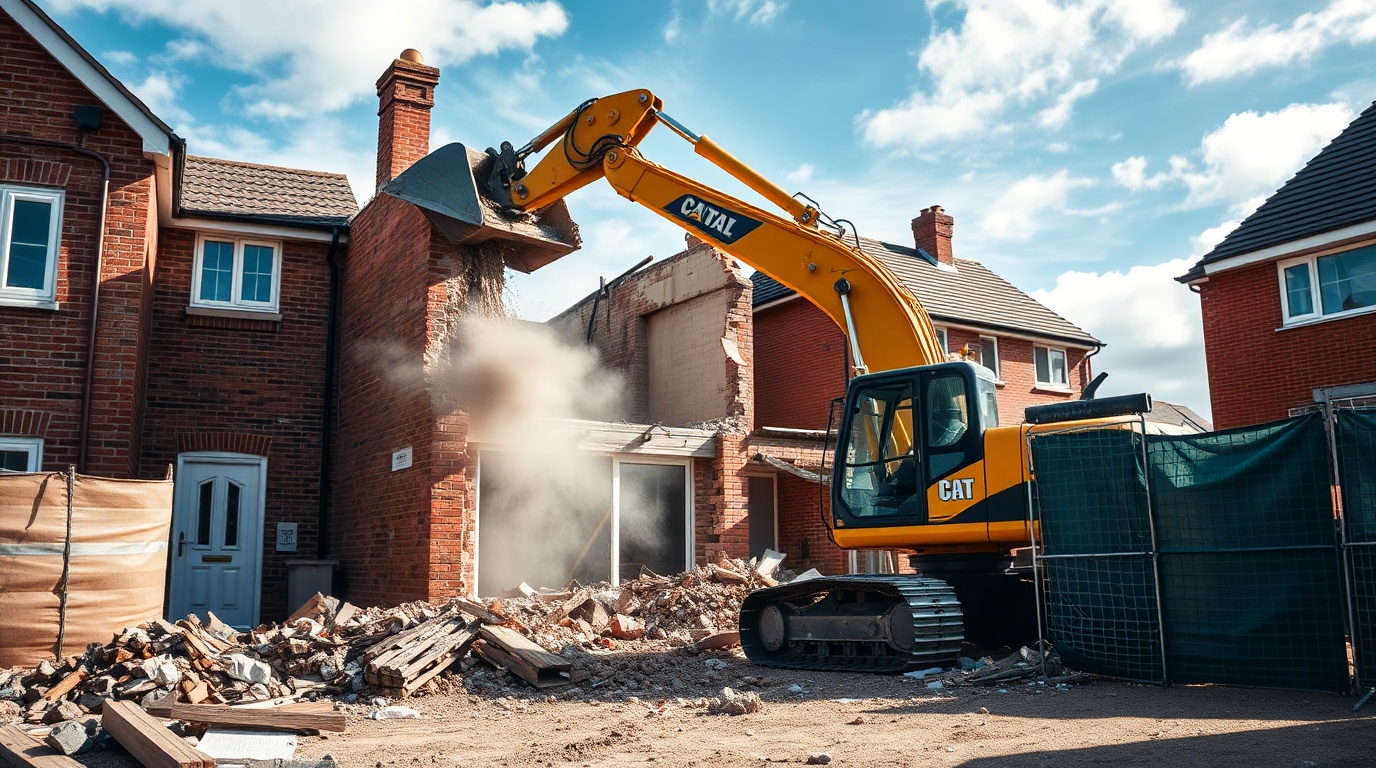
Demolishing a brick outbuilding in the UK typically costs between around £800 and £3,500, with most small to medium outbuildings falling in the £1,000 to £2,500 range. A small brick store or coal shed sits at the lower end, while a larger workshop, old annexe or substantial outbuilding with a concrete floor and footings is higher. The price normally covers labour, machinery or hand tools, waste removal and disposal. Cost is driven mainly by size and how solidly it is built, whether the slab and foundations are removed, access for a machine, and whether the building is attached to the house or shares a wall, which needs extra care. Any asbestos in the roof or panels is handled and priced separately. Figures here are indicative ranges, not quotes.
A brick outbuilding is more substantial than a shed and produces heavier waste, so it costs more to remove. The sections below explain the typical ranges and what moves them up or down.
Typical UK ranges
- Small brick store~£800–£1,500
- Medium outbuilding/workshop~£1,200–£2,500
- Large outbuilding/old annexe~£2,000–£3,500+
- Slab + foundations (extra)~£300–£1,000
- Asbestos handlingExtra, priced separately
What affects the price of demolishing a brick outbuilding
Brick and block produce dense, heavy waste, so disposal is a major part of the cost and is charged by weight. Size is the obvious driver, but how solidly the outbuilding is built matters just as much: thick walls, a reinforced concrete floor and deep footings all add labour, machine time and muck-away. A simple single-skin brick store comes down quickly, whereas a double-skin workshop with a concrete slab is a bigger job.
Access is the next big factor. If a mini-excavator can reach the structure, demolition is faster and cheaper. If everything must be taken down by hand and barrowed through the house or a narrow side passage, labour rises sharply. The route the waste takes to a skip or grab lorry can be as influential on price as the building itself.
| Outbuilding | Typical cost | Main drivers |
|---|---|---|
| Small brick store | £800–£1,500 | Light structure, easy access |
| Medium workshop | £1,200–£2,500 | Heavier walls, some slab |
| Large outbuilding/annexe | £2,000–£3,500+ | Solid build, footings |
| Attached to house | Add a premium | Protect the retained wall |
Indicative UK figures for guidance. Sources: Checkatrade and MyJobQuote demolition cost guides.
Slab, foundations and attached structures
As with garages, the concrete floor and foundations are often priced separately from the structure. If you want a clear plot for a build or garden, breaking out and removing the slab and footings adds cost; if you are keeping the base, you save it. Old outbuildings sometimes have surprisingly deep or wide foundations, so it is worth confirming what is in scope.
Where an outbuilding is attached to or shares a wall with the house or a neighbour, the job changes character. The retained wall must be protected and made weathertight, and party wall considerations can apply if the boundary is shared. This careful, partial demolition is slower than knocking down a free-standing building, which is reflected in the price. There may also be a cost to make good the wall and ground afterwards.
Asbestos, services and permissions
Older outbuildings frequently have asbestos cement roof sheets or panels, which must be removed and disposed of separately under the correct controls and are priced as a distinct item. If the building has electricity, water or drainage, those services should be safely disconnected before demolition. It is also sensible to clear contents and arrange any utility disconnection in advance to keep the job moving.
Demolishing a typical domestic outbuilding usually does not need planning permission, but larger demolitions can require notice to building control, and there are exceptions in conservation areas and for listed buildings, so checking with your local authority is worthwhile. Because outbuildings vary so much in construction, base depth and access, the reliable way to budget is to have a contractor assess the structure and confirm exactly what is included rather than relying on an average figure.
Frequently asked questions
Why does a brick outbuilding cost more than a shed?
Brick and block produce dense, heavy waste that is charged by weight, and the walls, slab and foundations take more labour and machine time to remove. A shed is usually lightweight and dismantled by hand, so it is far cheaper.
Is the concrete floor included in the price?
Often it is priced separately. Breaking out and removing a slab and its footings adds labour and heavy disposal. If you intend to reuse the base, leaving it in place reduces the cost.
Do I need permission to demolish an outbuilding?
A typical domestic outbuilding usually does not need planning permission, but larger demolitions can require notice to building control, and conservation areas and listed buildings have exceptions. It is sensible to check with your local authority first.
Sources & further reading
Figures on this page are typical UK ranges drawn from published sources and depend on your specific building. They are guidance, not a quotation.