The short answer
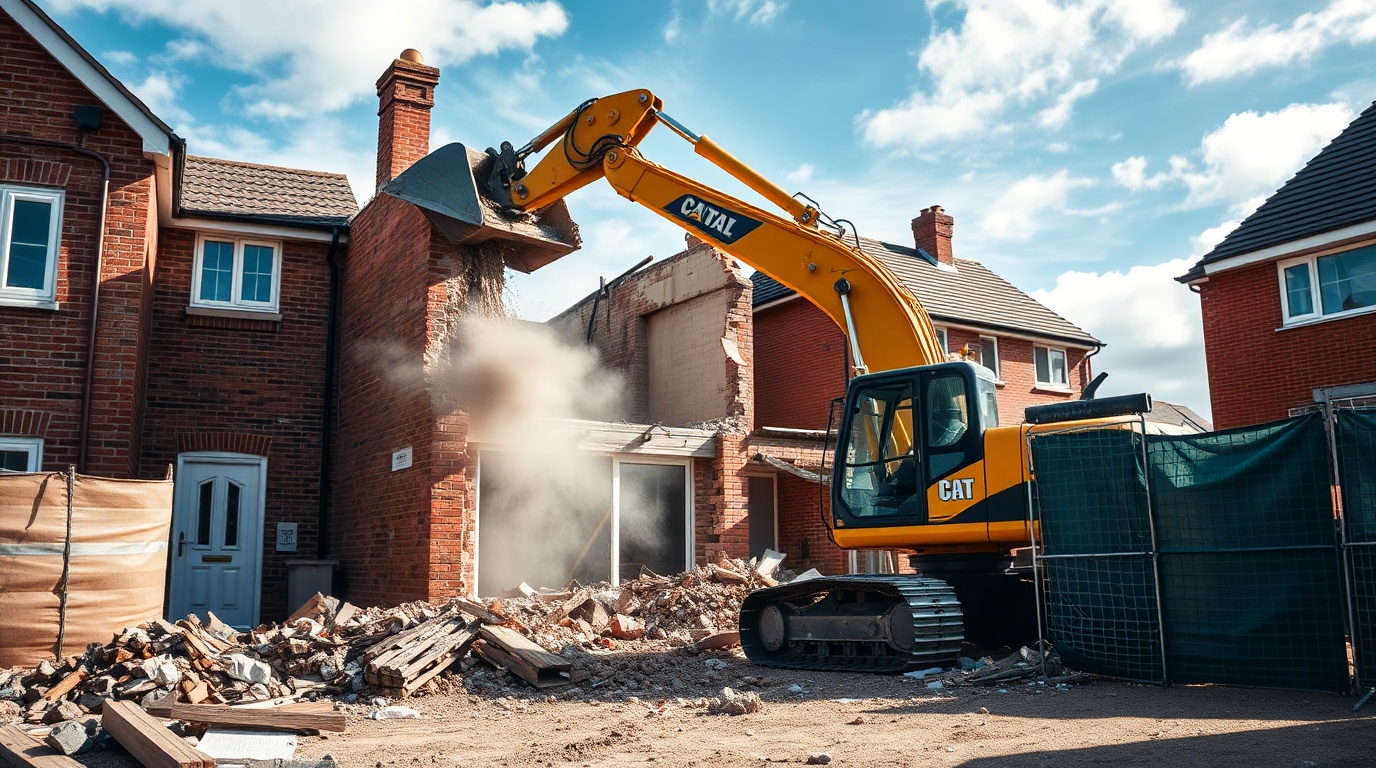
Demolishing an extension in the UK typically costs from around £2,000 to £6,000+, depending on its size, construction and how the waste is dealt with. A single-storey extension is at the lower end; a larger or two-storey extension costs more. A key part of the job that people overlook is making good the main house where the extension joined it: the wall, roof line and any openings have to be sealed, weatherproofed and finished so the remaining property is sound. There may also be foundation removal, service disconnections if the extension contained a kitchen or bathroom, and asbestos if the structure is old enough to contain it. The figure is driven by size, construction, the complexity of the join, and waste disposal. A site visit gives the real number.
Removing an extension is a common renovation step, often to make way for a new, larger one. The demolition is straightforward; the tidy reinstatement of the house is the part to get right.
Extension demolition
- Typical range~£2,000–£6,000+
- Single-storeyLower end
- Two-storey / largeHigher
- Often overlookedMaking good the house wall
- Check forAsbestos, services, foundations
What drives the cost
The price reflects the extension's size and construction, the join to the house, and waste. The table gives indicative figures for guidance.
| Factor | Effect | Notes |
|---|---|---|
| Single-storey extension | Lower cost | Less structure and waste |
| Two-storey / large extension | Higher cost | More structure, more waste |
| Making good the house | Adds cost | Seal, weatherproof, finish |
| Foundation removal | Often separate | If a clear plot is wanted |
| Asbestos / services | Variable | Survey; disconnect if present |
Indicative UK figures for guidance only. Sources: Checkatrade and MyJobQuote demolition cost guides, 2026.
The join is the important bit
- Sealing the wall: where the extension met the house, the exposed wall must be made watertight and structurally sound, with any openings (doors, windows that led into the extension) closed up or reinstated.
- Roof line: the point where the extension roof tied into the main roof needs careful weatherproofing to prevent leaks.
- Finishes: external rendering, brickwork or cladding, and any internal making good, so the house looks and performs as it should.
- Services: if the extension held a kitchen, bathroom or radiators, the relevant services must be capped or re-routed safely.
Permissions, asbestos and waste
Demolishing an extension may need to be notified to the local authority, and if the house is listed or in a conservation area, stricter rules apply — check before starting. Older extensions can contain asbestos (for example in roof sheets or soffits), so a check is sensible before work. Waste is a meaningful cost: even a modest extension produces several skips of brick, block, timber and glass, and tipping and haulage scale with volume. If you want the ground where the extension stood cleared and levelled — perhaps for a new extension or landscaping — foundation removal and clearance are usually separate items. As with any demolition, the safest comparison between quotes is one that itemises the take-down, the making good, the waste and any clearance.
Planning an extension demolition that leaves a sound house
Because removing an extension exposes part of the existing house, the goal is a property that is weathertight, structurally sound and tidy afterwards — not just an empty space where the extension was. A few checks make that outcome reliable.
- Specify the making good in the quote: ask explicitly for the wall sealed and finished, the roof line weatherproofed, and any openings closed up, so this essential work is priced rather than assumed.
- Confirm what happens to services: if the extension contained a kitchen, bathroom or heating, agree how the services are capped or re-routed before demolition.
- Check for asbestos in older extensions: roof sheets, soffits and some panels in older structures can contain asbestos and should be checked before disturbance.
- Decide the end state of the ground: whether you want foundations left in or removed and the area levelled depends on your next plans, and it affects both cost and scope.
- Check permissions: confirm whether notification applies and whether listed-building or conservation-area rules affect the work.
Get the making good, services and end-state agreed up front, and removing an extension becomes a clean, predictable job that leaves the rest of the house in good order. Skip those details and the saving on the demolition can be wiped out by remedial work to a wall or roof that was left poorly finished.
Replacing an extension with a new one
Many extension demolitions happen because the owner wants a bigger or better extension in its place, and in that situation the demolition and the new build are best planned together. Treating them as one project avoids paying twice and keeps the work flowing from one stage to the next.
- Decide the new design first: knowing what the replacement extension will be tells you whether the old foundations and base can stay, need adapting, or have to be removed entirely, which directly affects the demolition scope.
- Assess the existing foundations: an old extension's foundations are not automatically suitable for a new, larger or differently arranged one. A structural engineer should confirm whether they can be reused or must be replaced, with building control involved.
- Coordinate the making good: there is little point fully finishing the house wall where the old extension joined if the new extension will reconnect at the same point. Planning the two stages together avoids reinstating something you are about to reopen.
- Handle services once: capping and re-routing services can be planned so the new extension's plumbing, heating and electrics pick up cleanly, rather than disconnecting and reconnecting twice.
- Sort permissions for the new build: the replacement extension will have its own planning and building control requirements, which are separate from notifying the demolition.
Planned as a single project, the demolition becomes the first phase of building the new extension, and the contractor can sequence the work so each piece is done once. This is usually more efficient and cheaper than treating the demolition and the new build as two unrelated jobs handled by different people at different times. If you are removing an extension purely to open up the rear of the house with no replacement, the considerations are simpler — making good and the end state of the ground are the main decisions — but where a new extension is coming, lining the two up is what keeps the overall cost sensible. The contractor who understands your end goal can advise on what to keep and what to remove, so you spend on the work that genuinely serves the finished result rather than on undoing and redoing the same details twice.
Frequently asked questions
Is removing an extension cheaper than demolishing a house?
Yes, usually much cheaper, because an extension is smaller than a whole house and produces less waste. The cost depends on size, construction, the work to make good the house wall and roof where it joined, and waste disposal.
What does 'making good' mean after removing an extension?
It means repairing and finishing the part of the house exposed by the demolition — sealing and weatherproofing the wall and roof line, closing up any openings, and finishing the surfaces — so the remaining property is sound, watertight and tidy.
Do I need permission to demolish an extension?
It may need to be notified to the local authority, and listed buildings or conservation areas have stricter rules. Check with your council before starting. If you plan to build a new extension in its place, that will have its own permission requirements.
Sources & further reading
- Checkatrade — demolition cost guide
- MyJobQuote — house demolition cost guide
- HSE — asbestos essentials
Figures on this page are typical UK ranges drawn from published sources and depend on your specific building. They are guidance, not a quotation.