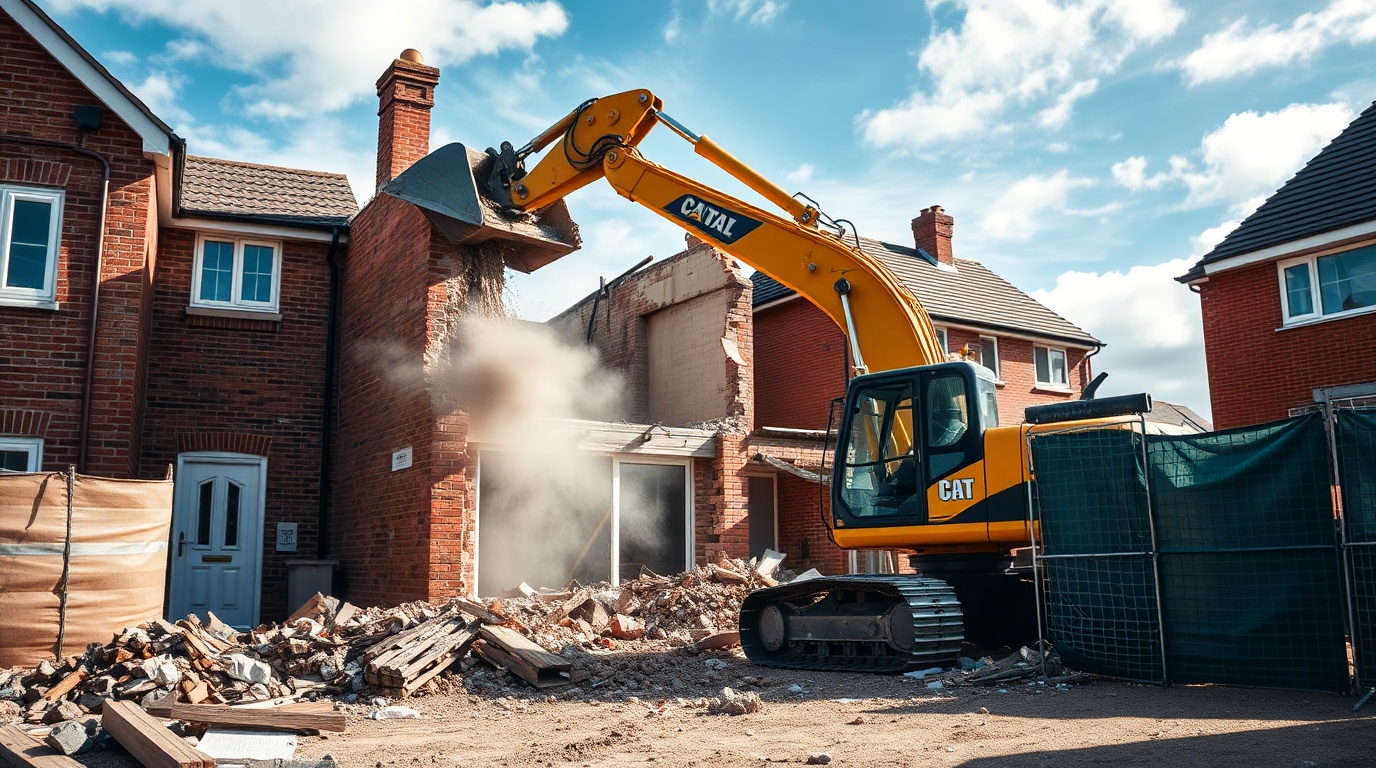
The short answer
Demolition is governed by a framework of health and safety law, with the Construction (Design and Management) Regulations 2015 (CDM 2015) at its centre. Demolition counts as construction work, so CDM 2015 requires it to be planned, managed and carried out safely, with duties on clients, designers and contractors. Alongside CDM, the Control of Asbestos Regulations 2012 govern any asbestos, and broader duties under the Health and Safety at Work etc. Act 1974 apply to protect workers and the public. The work must control the principal demolition hazards — unplanned collapse, falls from height, falling materials, dust and hazardous substances — and protect people in and around the site. The HSE enforces these rules. A written method statement and a competent, supervised workforce are central to doing demolition safely.
Demolition is one of the higher-risk activities in construction, and several overlapping rules apply. This page sets out the main legal framework and the hazards that demolition safety is designed to control.
Key facts
- Central regulationsCDM 2015
- AsbestosCAR 2012
- Overarching lawHSW Act 1974
- EnforcerHSE
- Core toolMethod statement
The main legal framework
Several pieces of law combine to govern demolition safety in Great Britain:
- Health and Safety at Work etc. Act 1974: the overarching law placing general duties on employers and others to protect the health and safety of workers and the public.
- CDM 2015: applies to demolition as construction work, requiring it to be planned, managed and carried out safely, with defined duty holders.
- Control of Asbestos Regulations 2012: govern the identification, management and removal of asbestos, which is one of the most serious hazards in demolishing older buildings.
- Other regulations: depending on the work, rules on working at height, lifting operations, control of substances hazardous to health, and noise and vibration can also apply.
The HSE is the enforcing authority for these workplace safety rules and can inspect sites and take action where work is unsafe. The framework is designed so that risks are identified and controlled before and during the work, not addressed only after something goes wrong.
The principal hazards to control
Demolition creates specific, well-recognised hazards that the safety arrangements must address. A competent contractor plans the work to control each of these:
- Premature or uncontrolled collapse: structures must be taken down in a planned sequence so the building does not collapse unexpectedly. This requires understanding how the structure is supported.
- Falls from height: demolition often involves working at height, so edge protection, access equipment and safe systems of work are needed.
- Falling materials and debris: exclusion zones, controlled drop areas and protection for those below and nearby are essential.
- Dust and hazardous substances: demolition generates dust, including potentially silica and asbestos, which must be controlled through removal, suppression and respiratory protection.
- Plant and vehicles: excavators and other plant must be operated by trained people with people kept clear of moving machinery.
The risks vary with the building and method, but planning the sequence, choosing the right method and protecting people in and around the site are common to every job.
Planning, competence and protecting the public
Turning the legal duties into safe work on the ground relies on a few practical foundations:
- Survey and assessment: understanding the structure, its condition and the hazards present — including a refurbishment and demolition asbestos survey for older buildings.
- Method statement and risk assessment: a written plan setting out the sequence of demolition and the controls for each hazard, prepared before work starts.
- Competent workforce and supervision: trained operatives, competent supervision and the right plant and equipment for the chosen method.
- Protecting the public: hoarding, exclusion zones, dust control and traffic management to keep neighbours, passers-by and adjoining properties safe.
These run alongside the planning and notification requirements — including the Section 80 demolition notice to the local authority and arranging utility disconnections. Treating demolition safety as an integrated part of planning the job, rather than a set of forms completed afterwards, is what keeps both workers and the public out of harm and keeps the project on the right side of the law.
Choosing the demolition method safely
Safety and the choice of demolition method are closely linked, because different methods carry different risks and suit different structures. The method must be chosen to match the building, its surroundings and the hazards present. Broad approaches include:
- Mechanical demolition: using excavators and attachments to take a structure down. It is efficient for many buildings but requires exclusion zones, careful sequencing and trained operators to control collapse and debris.
- Hand demolition or soft strip: removing elements by hand, often used to strip out fittings and hazardous materials before the main demolition, or where machinery cannot be used safely.
- Deconstruction: taking a building apart in a controlled, often reverse-of-construction sequence, which can be safer where adjoining buildings or sensitive surroundings are involved.
Whatever the method, the principle is the same: the work is planned so the structure comes down in a controlled way without unplanned collapse, and people in and around the site are protected. The method statement records the chosen approach and the controls for each stage, and competent supervision ensures it is followed. Selecting an inappropriate method, or deviating from the plan, is a common route to serious incidents.
Keeping safety live throughout the job
Health and safety in demolition is not a one-off exercise at the planning stage — it has to be maintained as the work proceeds, because conditions change as a building is taken apart. Practical elements of keeping safety live include:
- Monitoring the structure: watching for unexpected instability as elements are removed, and adjusting the method if the building behaves differently than anticipated.
- Controlling dust continuously: suppression and, where needed, respiratory protection throughout the work, not just at the start.
- Maintaining exclusion zones: keeping people clear of drop areas and moving plant as the work moves around the site.
- Reviewing the plan: updating the method statement and risk assessment if circumstances change, such as discovering unexpected materials.
- Competent supervision: ensuring someone with the right knowledge oversees the work and can stop it if something is unsafe.
This ongoing management is exactly what CDM 2015 and the wider health and safety framework are designed to require. Combined with thorough up-front planning, a competent workforce and proper protection of the public, it is what allows a demolition — one of the higher-risk construction activities — to be carried out without harm. The HSE's role is to enforce these standards, but the responsibility for applying them rests with the duty holders on every job.
How the rules fit together on a project
One reason demolition safety can seem complicated is that several rules apply at once. In practice they are complementary rather than competing, and a well-run project addresses them together:
- CDM 2015 is the overarching management framework, requiring the work to be planned, managed and carried out safely by competent duty holders.
- The Control of Asbestos Regulations 2012 deal specifically with asbestos, feeding the survey and removal into the CDM planning for older buildings.
- The Health and Safety at Work etc. Act 1974 sits above both, placing general duties to protect workers and the public.
- The Building Act 1984 brings in the Section 80 notice and any Section 81 conditions, dealing with the council's safety requirements.
- Task-specific regulations on working at height, hazardous substances and lifting apply where the work involves them.
Rather than treating these as separate hurdles, a competent contractor weaves them into a single plan: the survey informs the method statement, the method statement reflects the CDM duties and the council's conditions, and the whole is overseen by competent supervision on site. The HSE enforces the workplace safety elements and can intervene where work is unsafe. For anyone commissioning a demolition, the practical message is that safety is not one rule but a connected framework, and the dependable way to satisfy it is to use competent people who plan the job properly, control the principal hazards, protect the public, and keep the arrangements live as the work proceeds.
Frequently asked questions
What is the single most important safety document for demolition?
There is no single document, but a written method statement and risk assessment are central. They set out the planned sequence of demolition and the controls for each hazard, prepared before work begins. For older buildings, a refurbishment and demolition asbestos survey is equally essential.
Who is responsible for demolition safety?
Responsibility is shared under CDM 2015 between the client, designers and contractors, each with defined duties. The principal contractor manages the construction phase on site, while workers must also take care of their own and others' safety. The HSE enforces these duties.
How is the public protected during demolition?
Through measures such as hoarding and exclusion zones to keep people away from the work, dust suppression to control airborne particles, protection of adjoining buildings, and traffic management. These are planned in advance as part of the method statement and are required to keep neighbours and passers-by safe.
Sources & further reading
Figures on this page are typical UK ranges drawn from published sources and depend on your specific building. They are guidance, not a quotation.