The short answer
UK demolition uses several methods, chosen to suit the building and its surroundings: hand (manual) demolition, machine demolition with excavators and attachments, high-reach demolition for tall buildings, and deconstruction where materials are carefully dismantled for reuse. Explosive demolition exists but is rare in the UK and reserved for specific large structures. For most domestic and small commercial jobs, the choice is between hand demolition, used for small, sensitive or hard-to-access work, and machine demolition, used for larger structures with room for plant. The method is decided by the building's height and construction, how close it is to other buildings and the public, what is being retained, and how much material is to be recovered. Most jobs use a combination rather than a single method.
There is no single way to demolish a building; the method is matched to the job. The sections below explain the common UK methods and what determines which is used.
Common methods
- Hand demolitionSmall, sensitive, tight access
- Machine demolitionLarger structures, room for plant
- High-reachTall buildings, top-down
- DeconstructionCareful dismantling for reuse
- ExplosiveRare in the UK, specialist
Hand and machine demolition
Hand (manual) demolition uses people with hand tools and small breakers to take a structure down piece by piece. It is the method for small buildings, jobs in tight spaces where machinery cannot reach, sensitive sites next to other buildings, and any work where parts of the structure are being retained. It is slower and more labour-intensive but offers the most control, which is why it is common on domestic projects such as garages and outbuildings and on the more delicate parts of larger jobs.
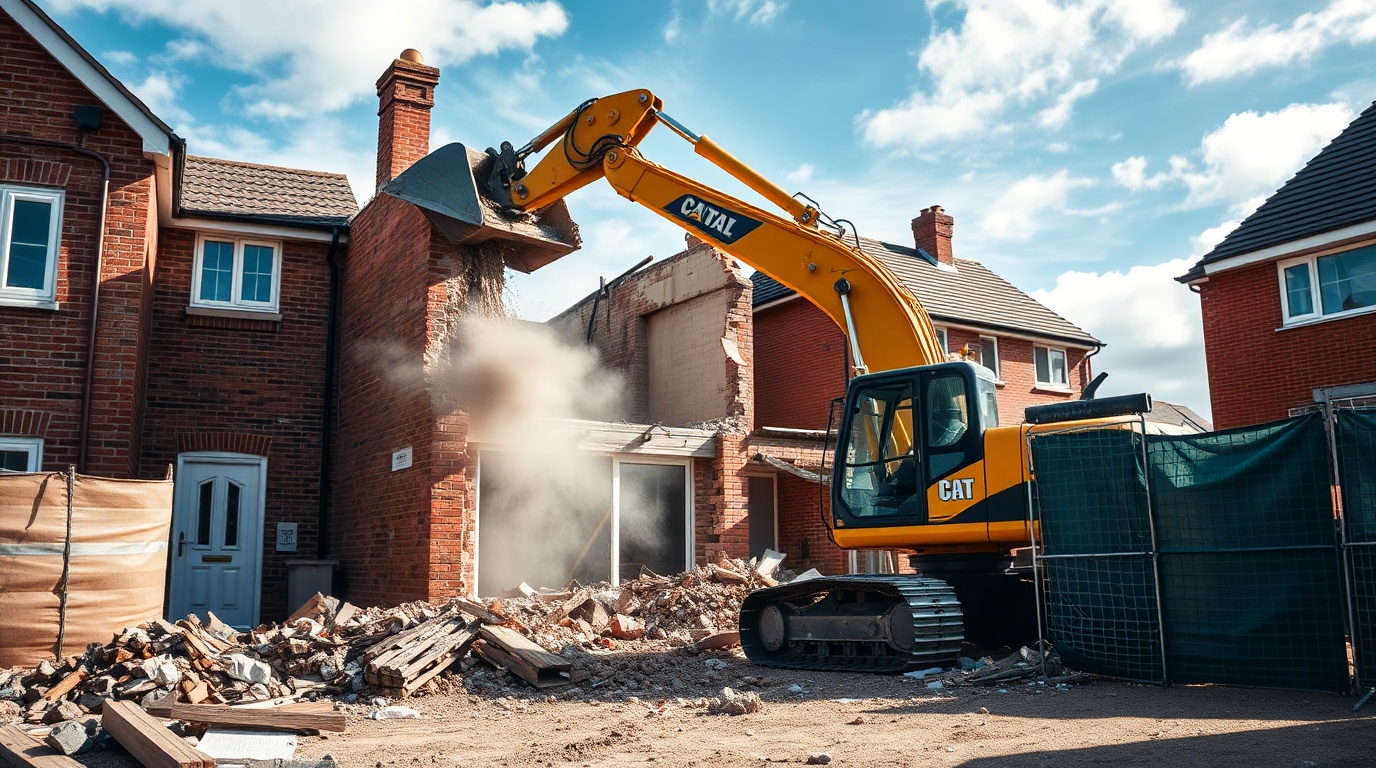
Machine demolition uses excavators fitted with attachments such as breakers, pulverisers, shears and grapples to bring down larger structures quickly. It suits buildings with enough surrounding space for the machine to work safely and for the debris to fall clear. Machine work is faster and handles heavy concrete and steel efficiently, but needs room and careful control of the sequence so the structure comes down predictably.
| Method | Typical use | Trade-off |
|---|---|---|
| Hand demolition | Small/sensitive, tight access | Slower, very controlled |
| Machine demolition | Larger structures, space | Fast, needs room |
| High-reach | Tall buildings | Specialist plant |
| Deconstruction | Reuse and recovery | Slower, recovers materials |
Indicative method selection. General guidance, not a method statement.
High-reach, deconstruction and explosive demolition
High-reach demolition uses long-armed excavators that can reach the top of tall buildings and work downwards from a safe distance. It is the modern alternative to demolishing tall structures, allowing controlled top-down removal without people working at height on the structure itself. It is specialist work for multi-storey buildings rather than domestic jobs.
Deconstruction, sometimes called dismantling, takes a building apart carefully so that materials can be recovered and reused rather than crushed. It is slower and more labour-intensive but recovers the most value and diverts the most material from landfill, and it suits buildings with reusable timber, steel or fittings. Explosive demolition, bringing a structure down with charges, is the method most people picture, but in the UK it is rare and reserved for specific large structures where it is the safest and most practical option; the vast majority of demolition is done by hand or machine.
What decides the method
Several factors determine which method is used. Height and construction set the basic approach: a single-storey brick outbuilding is very different from a multi-storey concrete frame. Surroundings matter greatly, how close the building is to other structures, roads and the public decides how much control is needed and whether machinery can be used safely. What is being retained, a shared wall or an adjoining property, often forces hand work in those areas.
Finally, recovery goals influence the choice: where reuse and recycling are priorities, deconstruction or careful machine work with sorting is preferred over fast, mixed demolition. In practice the contractor sets out the method in the demolition plan required under CDM 2015, balancing safety, the building, the site and the waste strategy. That is why two superficially similar buildings can be demolished in quite different ways.
Frequently asked questions
Is explosive demolition common in the UK?
No. Explosive demolition is rare and reserved for specific large structures where it is the safest, most practical option. The vast majority of UK demolition, including almost all domestic and small commercial work, is done by hand or machine.
What is the difference between demolition and deconstruction?
Demolition takes a structure down efficiently, often crushing the material for recycling. Deconstruction carefully dismantles the building so components such as timber, steel and fittings can be reused. Deconstruction is slower but recovers more value and diverts more from landfill.
Who decides which method is used?
The contractor sets out the method in the demolition plan required under CDM 2015, based on the building's height and construction, its surroundings, what is being retained, and the recovery goals. Safety and the site usually drive the decision.
Sources & further reading
Figures on this page are typical UK ranges drawn from published sources and depend on your specific building. They are guidance, not a quotation.