The short answer
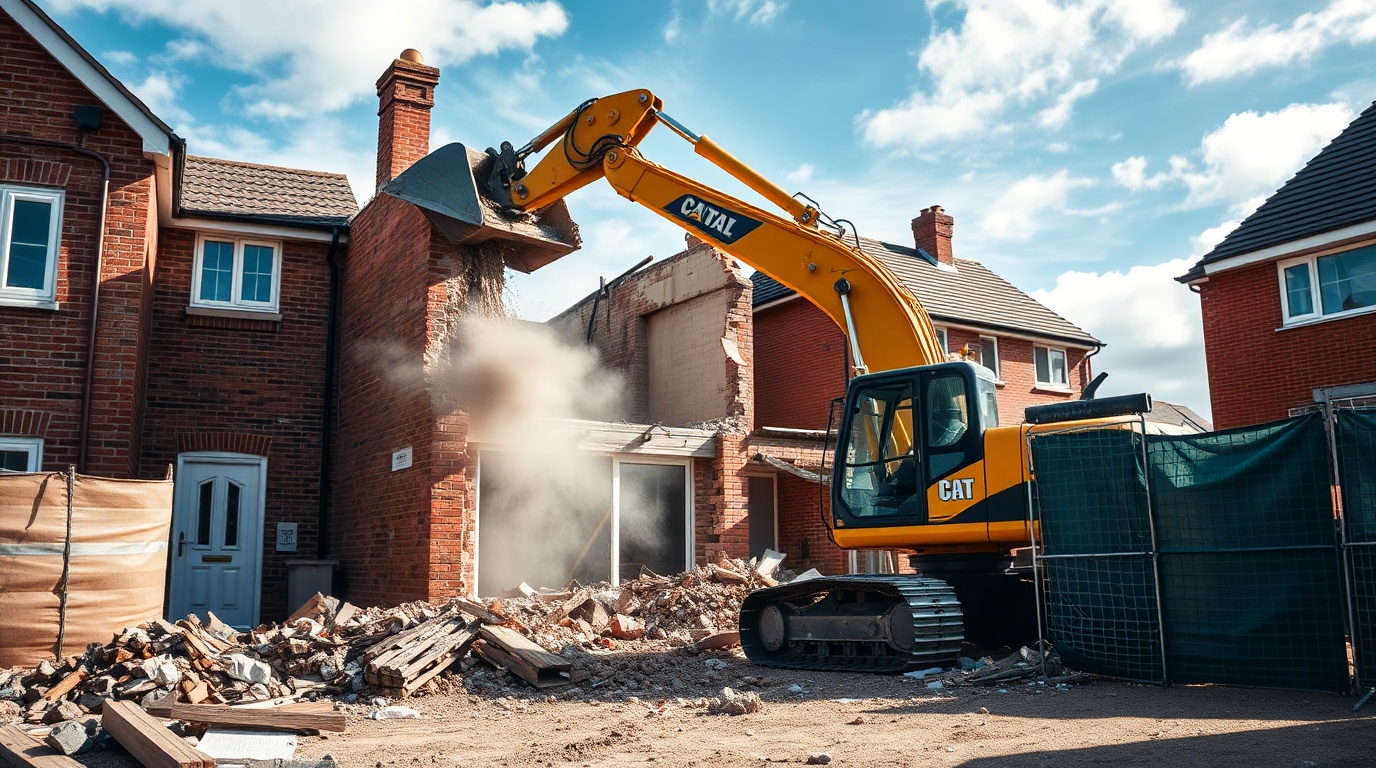
Garage demolition and waste removal are usually a single combined job: the structure is taken down, the materials are sorted, and the waste is loaded into skips or a grab lorry and taken to a licensed facility. Waste removal is often the largest single cost after labour, because brick, block and concrete are heavy and disposal is charged by weight. Most demolition rubble is inert hardcore that can be crushed and recycled, while metal and clean timber are separated for recycling too. Any asbestos is removed separately and sent to a licensed disposal site with the correct paperwork. Choosing between skips and a grab lorry depends on access and how much waste there is. Understanding how removal works helps explain why a garage demolition quote is priced the way it is.
For most homeowners, demolition and removal are bought as one service, but it helps to know how the waste side works. The sections below explain the methods, what gets recycled, and how disposal shapes the cost.
How removal works
- Combined serviceDemolition + clearance together
- Main wasteBrick, block, concrete (inert)
- RecyclableHardcore, metal, clean timber
- AsbestosSeparate, licensed disposal
- Disposal costCharged by weight/load
Skips, grab lorries and access
There are two common ways to remove garage waste, and the right choice depends on access and volume. A skip is dropped on the driveway or road and filled by hand or machine; it suits smaller jobs and sites where a skip can be placed easily, though a road skip may need a council permit. A grab lorry has a hydraulic arm that scoops rubble straight from a heap over a wall or fence, which is efficient for heavy concrete and where a skip cannot be sited, but it needs room for the lorry to park and reach.
For a single garage, one skip or one grab load often handles the structure, with the slab adding more if it is removed. Heavy concrete fills weight allowances quickly, so disposal is usually limited by weight rather than volume. A contractor will choose the method that fits the access and keeps the number of loads down, because each load carries a disposal charge.
| Method | Best for | Watch points |
|---|---|---|
| Skip | Smaller jobs, good access | Road skip may need a permit |
| Grab lorry | Heavy concrete, over a wall | Needs room to park and reach |
| Combined | Most garage jobs | Limited by weight, not volume |
General guidance on waste removal methods for garage demolition.
What gets recycled and what doesn't
A large share of garage demolition waste is recyclable. Inert hardcore, the brick, block and concrete, can be crushed and reused as aggregate or sub-base, which is why much of it does not go to landfill. Metal, such as steel doors, lintels and reinforcement, is separated and recycled, and clean timber can be recycled or reused. Sorting on site or at the facility increases how much is recovered and can reduce disposal charges compared with mixed waste.
Some materials cannot go in the general waste stream. Asbestos cement roof sheets or panels are the key example: they are removed first, kept intact, double-wrapped and taken to a site licensed to receive asbestos, with a consignment note. Treated or contaminated timber and certain other materials may also need separate handling. Keeping these out of the inert load is both a legal requirement and the reason asbestos is always priced separately.
How removal shapes the cost and the job
Because disposal is charged by weight and concrete is dense, waste removal often costs as much as the demolition itself, especially once a slab is included. This is why two quotes for the same garage can differ: one may include full clearance and disposal while another stops at taking the structure down. When comparing prices, confirm that loading, transport and disposal, and any asbestos consignment, are all in scope.
For the homeowner, the practical takeaway is that demolition and removal are best treated as one job with a clear scope. Decide whether the slab is being removed, check whether any asbestos is present, and agree how the waste will be handled, by skip or grab, and how many loads are likely. With those points settled, the price reflects the real volume of heavy waste, which is the main thing that drives garage demolition cost.
Frequently asked questions
Is waste removal included in a garage demolition quote?
Usually, but not always. Many quotes combine demolition and clearance, while some price only the structure. Because disposal of heavy rubble is a major cost, confirm that loading, transport and disposal, plus any asbestos, are included before comparing prices.
How much garage waste can be recycled?
A large share. Brick, block and concrete are inert hardcore that can be crushed and reused, and metal and clean timber are recovered too. Asbestos and some treated materials cannot be recycled and must be disposed of separately under controls.
Skip or grab lorry, which is better?
It depends on access and volume. A skip suits smaller jobs with space to place it, though a road skip may need a permit. A grab lorry is efficient for heavy concrete and where it can reach over a wall, but needs room to park.
Sources & further reading
Figures on this page are typical UK ranges drawn from published sources and depend on your specific building. They are guidance, not a quotation.