The short answer
Demolition works as a planned sequence: survey the building, isolate services and hazards, strip out the interior (soft strip), take the structure down with the right method, then sort and recycle the waste. It is the reverse of construction and is governed by safety law, principally the Construction (Design and Management) Regulations 2015 (CDM 2015), which require demolition to be planned and carried out so it does not endanger anyone. A demolition survey identifies asbestos and structure first, a soft strip removes fixtures and recoverable materials, and only then is the structure demolished by hand, machine or a combination. Most of the resulting material is recycled. The exact methods depend on the building's size, construction and surroundings.
Demolition looks like simple knocking-down, but it is a controlled, regulated process with a clear order. The sections below explain each stage and the safety framework that shapes it.
Process at a glance
- 1. SurveyAsbestos and structural survey
- 2. PlanMethod, safety, services
- 3. Soft stripRemove interior fittings
- 4. StructureHand, machine or both
- 5. WasteSort, crush, recycle
Survey and planning come first
Before anything is touched, the building is surveyed. A demolition (refurbishment and demolition) asbestos survey identifies any asbestos-containing materials, and a structural assessment establishes how the building is put together, what is load-bearing, and how it should come down. This information feeds a plan that sets the method, the sequence, the protection of neighbouring structures and the public, and how services will be isolated.
Planning is not optional. Under CDM 2015, demolition must be planned and managed so it is carried out without risk to health and safety so far as is reasonably practicable, and the arrangements must be recorded in writing. Utilities, electricity, gas, water and any drainage, are located and safely disconnected, and permissions or notices required by the local authority are arranged before work begins.
Soft strip, then structural demolition
With the plan in place, the building is usually soft stripped first. This means removing the non-structural interior, fixtures, fittings, services, ceilings, partitions, doors and recoverable materials, by hand. Soft strip recovers value, separates materials for recycling, and removes hazards before the heavy structural work starts. Any asbestos identified in the survey is removed at the appropriate point under the correct controls.
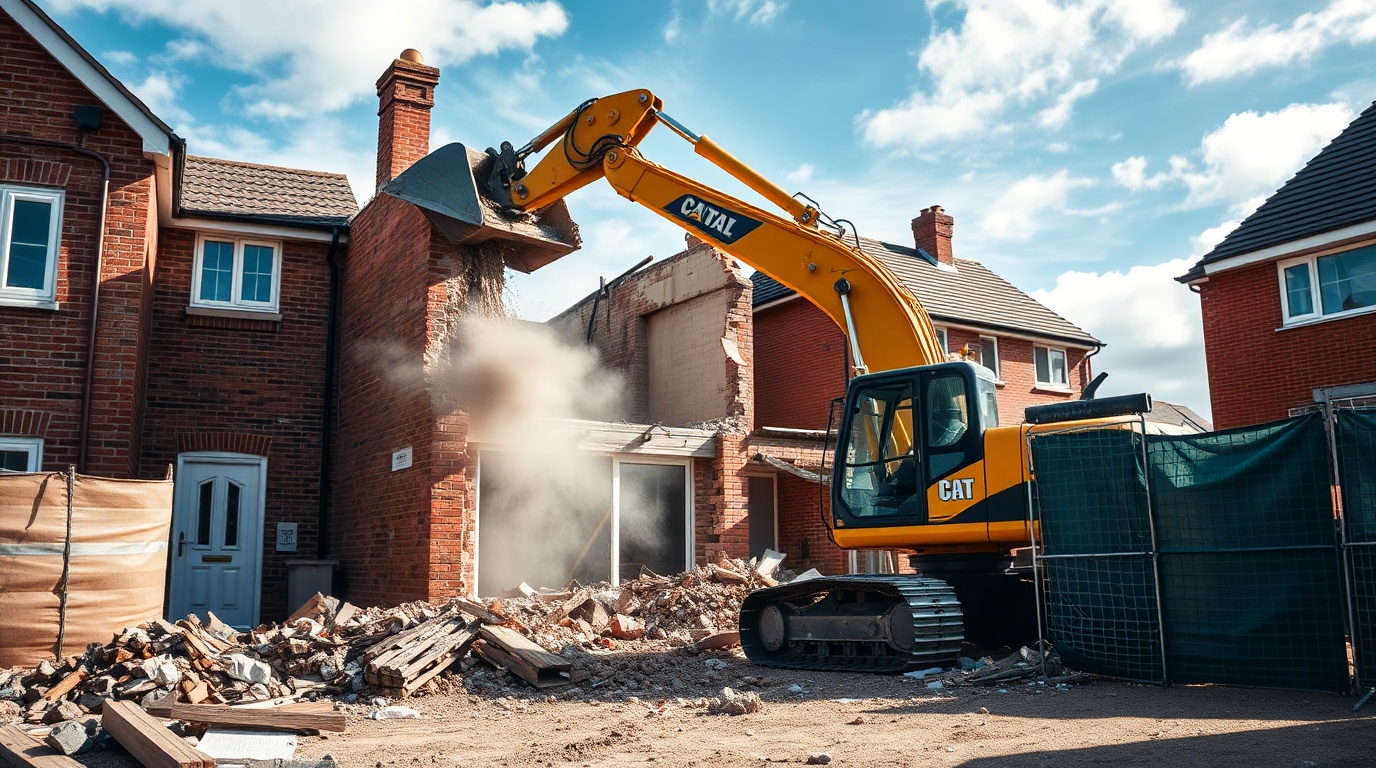
Only then is the structure itself demolished. The method is chosen to suit the building and its surroundings: hand demolition with tools for small or sensitive jobs, machine demolition with excavators and attachments for larger structures, or a combination. The work proceeds in a controlled top-down or progressive sequence so the building comes down predictably, with measures to control dust, noise and debris and to protect anything that is being retained or anyone nearby.
| Phase | What happens | Purpose |
|---|---|---|
| Survey | Asbestos + structural survey | Identify hazards and structure |
| Soft strip | Remove interior by hand | Recover materials, remove hazards |
| Structural | Hand and/or machine | Bring down the structure safely |
| Waste | Sort, crush, recycle | Recover and divert from landfill |
Typical UK demolition phases. General guidance, not a method statement.
Waste, recycling and site clearance
The final phase is dealing with what is left. Modern UK demolition recovers a high proportion of materials: concrete and masonry are crushed into recycled aggregate, steel and other metals are sent for recycling, and timber and other streams are separated where practical. Hazardous materials such as asbestos are kept apart and disposed of at licensed facilities. The site is then cleared and left safe, often with the ground levelled ready for whatever comes next.
Across the whole process, the common thread is control: knowing what the building contains, planning the method, working in a safe sequence, and managing the waste responsibly. That is why demolition is more than knocking a building down, and why the order, survey, strip, structure, waste, is followed on jobs from a single garage to a large commercial building.
Frequently asked questions
What is the first step in demolition?
A survey. An asbestos (refurbishment and demolition) survey identifies hazardous materials, and a structural assessment establishes how the building is built and how it should come down. This information shapes the plan and the chosen method before any work starts.
What law governs demolition in the UK?
Demolition is covered by the Construction (Design and Management) Regulations 2015 (CDM 2015), which require it to be planned and carried out so it does not put anyone at risk, with the arrangements recorded in writing. Other duties, such as asbestos rules, also apply.
What happens to the waste?
Most is recycled. Concrete and masonry are crushed into aggregate, metals are recycled, and timber and other materials are separated where practical. Hazardous materials such as asbestos are kept separate and disposed of at licensed facilities.
Sources & further reading
Figures on this page are typical UK ranges drawn from published sources and depend on your specific building. They are guidance, not a quotation.