The short answer
A building is demolished safely by surveying it first, planning the work in writing, isolating hazards and services, and bringing the structure down in a controlled sequence with measures to protect workers, neighbours and the public. UK demolition is regulated under the Construction (Design and Management) Regulations 2015 (CDM 2015), which require the work to be planned and managed so it is carried out without risk so far as is reasonably practicable. Key safeguards include an asbestos and structural survey, a written demolition plan, safe disconnection of utilities, a controlled top-down or progressive sequence so nothing collapses unpredictably, and control of dust, noise, debris and falling material. A competent contractor and the right method for the site are central to doing it safely.
Safe demolition is the product of planning and control, not luck. The sections below set out the framework, the surveys, and the on-site measures that keep a demolition safe.
Pillars of safe demolition
- SurveyAsbestos and structural survey
- PlanWritten plan under CDM 2015
- IsolateDisconnect services, fence off
- SequenceControlled, top-down/progressive
- ProtectDust, noise, debris, public
Survey and planning: the foundation of safety
Safe demolition begins long before anything is touched. A refurbishment and demolition asbestos survey identifies any asbestos-containing materials so they can be removed under the correct controls, and a structural assessment establishes how the building is built, what is load-bearing, and how it should be taken down. Without this knowledge, a structure could collapse in an unexpected way.
The findings feed a written demolition plan, which CDM 2015 requires for this kind of work. The plan sets out the method, the sequence, how the public and adjacent buildings will be protected, how services will be isolated, and the arrangements for managing dust, noise and waste. CDM 2015 also places duties on those involved to plan, manage and monitor the work so it is carried out without risk to health and safety so far as is reasonably practicable.
Controls on site
On site, several controls keep the work safe. Services are isolated: electricity, gas, water and drainage are located and safely disconnected before demolition so there is no risk of live supplies. The area is secured with hoarding or fencing to keep the public out, and exclusion zones protect anyone nearby from falling material. Adjacent structures are protected, with shared walls supported or carefully retained as needed.
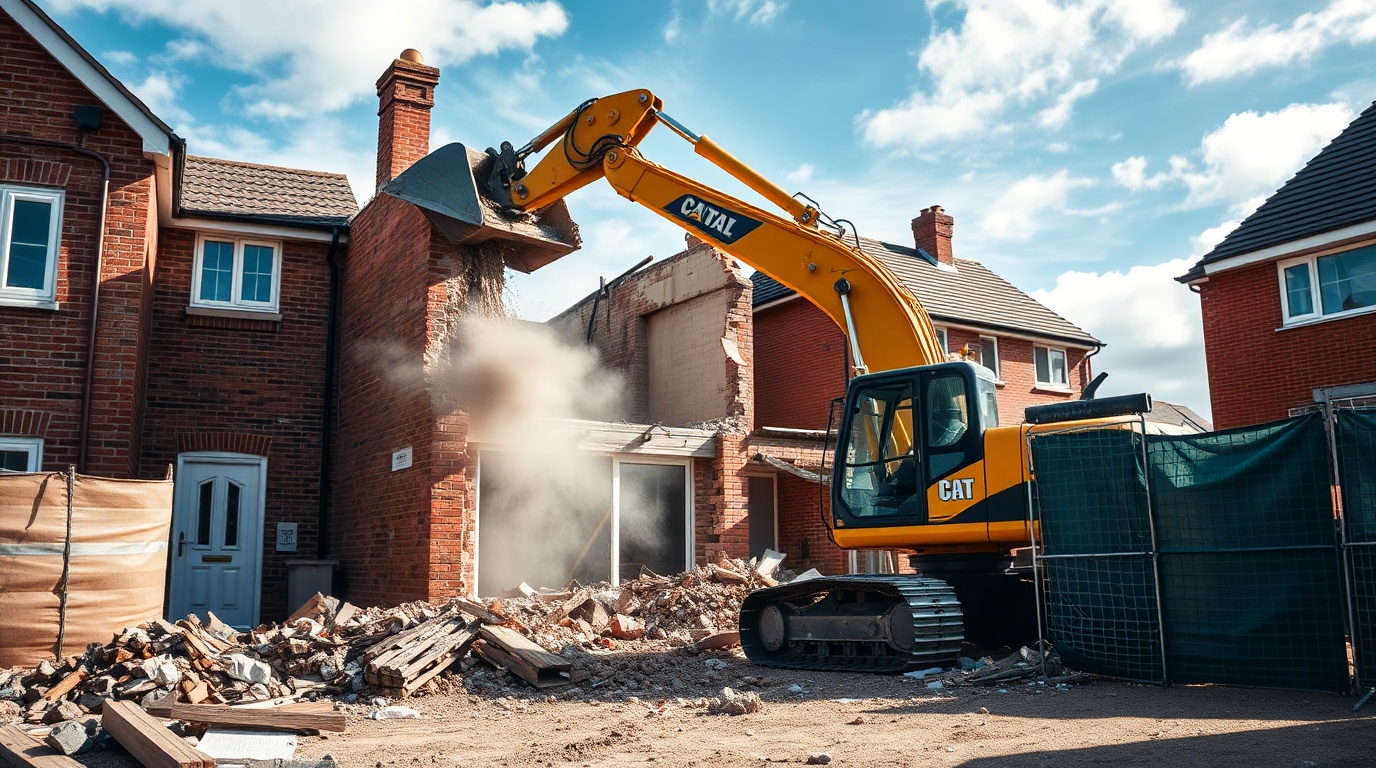
The structure is then taken down in a controlled sequence, usually top-down or progressive, so each part comes away predictably and the building never becomes unstable. Dust is suppressed, often with water, to protect health and reduce nuisance, and noise and vibration are managed. Workers use appropriate protective equipment and follow the method statement. The aim throughout is that nothing happens by surprise.
| Hazard | Control | Why it matters |
|---|---|---|
| Uncontrolled collapse | Planned top-down sequence | Keeps structure stable |
| Asbestos | Removed first, under controls | Prevents fibre release |
| Live services | Isolate and disconnect | Avoids electrocution, gas, flooding |
| Dust and debris | Water suppression, exclusion zones | Protects health and public |
Common demolition hazards and controls. General guidance only.
Competence and the people involved
Much of demolition safety rests on competence. The work should be carried out by a contractor with the right experience, training and equipment for the particular building and site, and supervised by people who understand the method and the risks. CDM 2015 places duties on the parties to a project, including the client, to ensure those appointed are competent and that the work is properly planned and resourced. Choosing an experienced demolition contractor is therefore a safety decision as much as a commercial one.
For homeowners, the same principles scale down to a garage or outbuilding: check for asbestos, isolate services, work in a controlled sequence, protect the surroundings, and dispose of waste correctly. The larger and more complex the building, the more the formal CDM 2015 framework applies, but the underlying logic, know what you are demolishing, plan it, and bring it down in a controlled way, is the same at every scale.
Frequently asked questions
What makes demolition safe?
Knowing what the building contains through surveys, planning the work in writing under CDM 2015, isolating services and hazards, bringing the structure down in a controlled sequence, and protecting workers, neighbours and the public from collapse, dust and debris.
Why is a structural survey important before demolition?
Because it establishes how the building is built and what is load-bearing, which determines how it should be taken down. Without that knowledge, a structure could collapse unexpectedly. The survey shapes the method and the safe sequence.
Does CDM 2015 apply to small demolitions?
The principles apply at every scale, even a garage should be surveyed for asbestos, have services isolated, and be taken down in a controlled way. The formal CDM 2015 duties become more significant on larger and more complex projects.
Sources & further reading
Figures on this page are typical UK ranges drawn from published sources and depend on your specific building. They are guidance, not a quotation.