The short answer
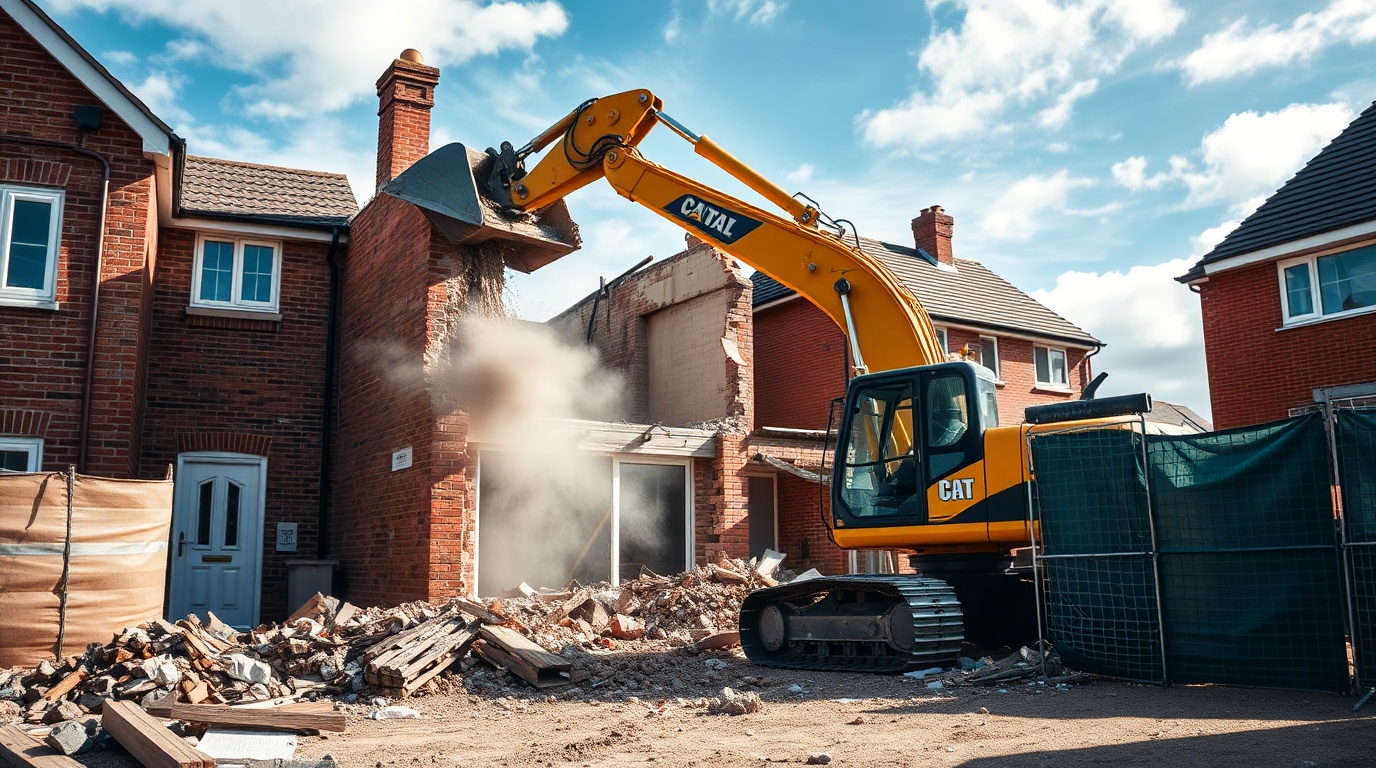
The physical demolition of a typical house often takes only a few days to about a week once it begins, but the whole process — from decision to cleared site — usually takes several weeks to a couple of months. The reason is preparation: the asbestos survey and any licensed removal, service disconnections for gas, electricity and water (which providers can take weeks to arrange), local authority notification and any prior approval, and any party wall agreement for a semi or terrace all have to be completed before the machine arrives. A detached house on an open plot with no asbestos is at the quick end; a terrace with party walls, asbestos and tight access takes longer. The take-down is fast, but it cannot start until the groundwork is done.
People are often surprised that a house can be down in a matter of days, yet the project as a whole takes weeks or even a couple of months. The gap is almost entirely in the preparation — the surveys, disconnections and permissions that must be completed before a machine ever arrives on site. Understanding where the time actually goes helps you plan realistically and avoid the frustration of a job that seems to be standing still. Here is a realistic timeline.
House demolition time
- Physical take-down~A few days to a week
- Whole process~Several weeks to 2 months
- DisconnectionsCan take weeks to arrange
- Slows the startAsbestos, party walls, notice
- QuickestDetached, open, no asbestos
A realistic timeline
The stages below run roughly in order, though some overlap. The table gives indicative durations for guidance.
| Stage | Indicative time | Notes |
|---|---|---|
| Asbestos survey | Days to a couple of weeks | Plus removal if found |
| Service disconnections | Often several weeks | Provider-led, start early |
| Notification / prior approval | Weeks | Local authority process |
| Party wall agreement | Weeks (if applicable) | Semi / terrace only |
| Physical demolition | A few days to a week | The fast part |
| Clearance + levelling | Days | If a clear plot is wanted |
Indicative UK timescales for guidance only. Sources: HSE demolition guidance; GOV.UK demolition notice guidance, 2026.
Why preparation takes the time
- Service disconnections: gas, electricity and water are disconnected by the providers, not the demolition contractor, and booking these can take several weeks.
- Asbestos: the survey must be done before work, and if asbestos is found, licensed removal happens first and adds time.
- Notification and approval: the local authority must usually be notified of demolition, and a prior approval process can apply, which takes weeks.
- Party walls: for a semi or terrace, agreeing notices with neighbours and appointing a surveyor adds lead time before work can start.
What affects the take-down itself
Once preparation is complete, the physical demolition is quick but its length still varies with the property and the site. A detached house on an open plot where a large machine can work freely comes down fastest. A terrace or semi takes longer because the work must be done carefully to protect the neighbouring properties and party walls, sometimes with more hand demolition. Restricted access — a tight street, no rear access, limited room for skips — slows the work and the removal of waste. Bad weather can interrupt the programme. And if you want a fully cleared, level plot rather than just the structure gone, breaking out foundations and grubbing out adds a little more time after the building is down. None of this changes the basic picture: the take-down is days, the project is weeks.
Planning the programme to avoid delays
Because the critical path runs through the preparation, not the demolition, sensible sequencing is what keeps a house demolition on schedule. The work divides into things you can start immediately and things that depend on them.
- Commission the asbestos survey early: it gates the whole job, and any removal it triggers needs to be scheduled before the take-down.
- Apply for disconnections straight away: these are provider-led and slow, so the application should go in as soon as the decision to demolish is made.
- Lodge the notification and any prior approval promptly: the local authority process runs in weeks, so it should run in parallel with the surveys and disconnections rather than after them.
- Serve party wall notices in good time: for a semi or terrace, neighbours and surveyors need notice, and this is a common cause of delay if left late.
- Book the contractor around the long poles: there is no point booking the machine before disconnections and approvals are likely to be complete.
Run the slow, dependency-creating tasks first and in parallel, and the few days of actual demolition slot neatly onto the end. Tackle them sequentially or late, and the project stretches — not because the building is hard to knock down, but because the paperwork and disconnections were not started in time.
What can extend the timeline
Even with good planning, several things can stretch a house demolition beyond the expected few weeks. Knowing them in advance lets you build sensible slack into the programme rather than being caught out.
- Asbestos discoveries: if the survey finds more asbestos than expected, or it is found mid-job, licensed removal has to be completed before demolition continues, which adds time.
- Slow disconnections: utility providers set their own timescales for disconnecting gas, electricity and water, and these can run to several weeks or longer depending on the provider and the work involved.
- Party wall negotiations: for a semi or terrace, if a neighbour disputes or delays a party wall notice, the process of appointing surveyors and reaching agreement can take longer than expected.
- Planning or notification queries: the local authority may ask questions or impose conditions on the demolition method or site restoration, extending the approval stage.
- Weather and access: bad weather can interrupt the work, and a restricted site that forces slower methods naturally takes longer.
- Protected wildlife: bats or nesting birds can require an ecology survey and constrain when work may proceed, occasionally adding weeks.
None of these is a reason to panic, but together they explain why a house demolition is best planned with a margin rather than to the tightest possible schedule. The physical take-down remains quick — a few days to a week — but the surrounding process has several points where time can slip. Building in slack, starting the slow items early, and choosing a contractor experienced in managing the surveys, disconnections and permissions is what keeps the overall project on track. If you have a hard deadline, such as a build that must follow on, share it with the contractor at the quoting stage so the programme can be planned backwards from it with the long-lead items prioritised.
Frequently asked questions
Can a house really be demolished in a day?
A small house can sometimes be taken down in around a day with the right machine and clear access, but a typical house is usually a few days to a week. The longer part of the project is the weeks of preparation beforehand.
What takes the longest in a house demolition?
Service disconnections and any local authority notification or party wall process are usually the longest items, often running to several weeks. Starting them early and in parallel is the best way to shorten the overall timeline.
Does asbestos removal delay demolition?
It can. The asbestos survey must be done before work, and if asbestos is found, licensed removal happens first under regulated conditions, which adds time. Commissioning the survey early avoids a mid-job hold-up.
Sources & further reading
- HSE — demolition health and safety
- GOV.UK — demolition (when you need to tell the council)
- MyJobQuote — house demolition cost guide
Figures on this page are typical UK ranges drawn from published sources and depend on your specific building. They are guidance, not a quotation.