The short answer
A garage is demolished in a planned sequence: check for asbestos, disconnect any services, strip out fittings, take the roof off, bring the walls down in a controlled way, then deal with the slab and clear the waste. The order matters for safety. The roof comes off first because it is the most hazardous part and may contain asbestos cement, which must be removed intact and separately. Walls are then taken down from the top, either by hand or with a small machine, so nothing collapses unpredictably. Finally the concrete slab and foundations are broken out if they are being removed, and all waste is sorted and taken to a skip, grab lorry or licensed disposal site. The exact method depends on whether the garage is prefab, brick or attached to the house.
Whether done by a contractor or a capable homeowner, garage demolition follows a logical order that keeps the work safe and the waste manageable. The sections below walk through each stage.
Typical sequence
- 1. SurveyCheck for asbestos, plan method
- 2. IsolateDisconnect services, clear contents
- 3. RoofRemove first (asbestos handled separately)
- 4. WallsDown from the top, controlled
- 5. Base + wasteBreak out slab, sort and remove
Before any demolition: survey and isolate
The first step is to understand what you are demolishing. The garage is checked for asbestos, particularly in the roof sheets and any panels, because this changes the method entirely. Its construction, prefab, brick or attached to the house, determines whether it will be dismantled or knocked down, and access is assessed to decide between hand tools and a machine. A short plan for the sequence and the waste route is set out at this stage.
Next, the garage is isolated. Any electricity, water or gas supply is safely disconnected by a competent person before work starts. Contents are cleared, and the surrounding area is made safe, keeping people and vehicles away from the working zone. Where the garage adjoins the house or a neighbour, protection for the retained wall is arranged.
Taking the structure down
Demolition then works from the top down. The roof is removed first, because it is the highest-risk element and, on older garages, the most likely to contain asbestos. If asbestos cement is present, the sheets are unfixed, kept whole, kept damp, double-wrapped and set aside for licensed disposal before anything else happens. A non-asbestos roof is simply stripped and the timber, felt or sheeting cleared.
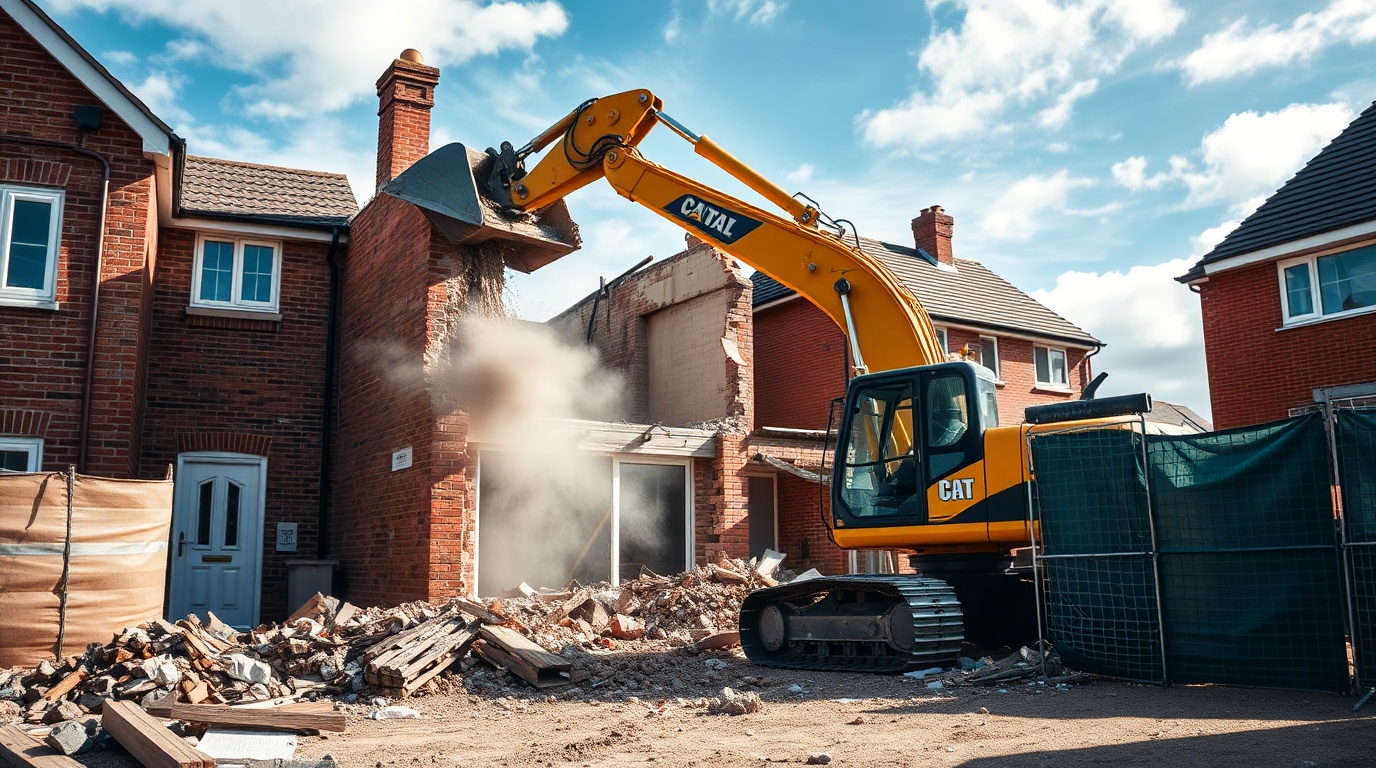
With the roof off, the walls come down. A lightweight prefab garage is usually unbolted panel by panel. A brick or block garage is brought down progressively from the top, either by hand with breakers or with a small excavator where access allows, so the structure falls in a controlled way rather than toppling. Lintels over doors and windows are dealt with carefully because they carry load. Throughout, the aim is to keep the work area clear and the debris contained.
| Stage | Prefab garage | Brick garage |
|---|---|---|
| Roof | Unbolt panels/sheets | Strip covering, remove timbers |
| Walls | Unbolt sections | Down from top, hand or machine |
| Slab | Break out if removing | Break out if removing |
| Waste | Sort, load, dispose | Sort, load, dispose |
Typical method by garage type. General guidance, not a method statement.
The base, the waste and finishing off
Once the structure is down, attention turns to the concrete slab and foundations. If they are being removed, they are broken out with a breaker or excavator and the heavy concrete is loaded for disposal. If the base is being kept for a replacement garage or parking, it is left in place and cleaned off. This decision is usually made before work starts because it affects both cost and the equipment on site.
Finally, the waste is cleared. Materials are sorted where practical so that clean hardcore, metal and timber can be recycled rather than tipped, and the rest goes to a skip or grab lorry. Any asbestos waste is consigned to a licensed site with the correct documentation. The ground and any retained wall are made good, leaving a clear, safe plot. The whole process for a single garage is often completed within a day or two, longer if asbestos, a thick slab or difficult access are involved.
Frequently asked questions
Why is the roof removed first?
The roof is the highest-risk part of the structure and, on older garages, the most likely to contain asbestos cement. Removing it first lets any asbestos be handled intact and separately, and makes the rest of the demolition safer and more controlled.
How long does demolishing a garage take?
A straightforward single garage is often demolished and cleared within a day or two. It takes longer if there is asbestos to remove separately, a thick reinforced slab to break out, or difficult access that means working by hand.
Is the slab always removed?
No. The concrete base is only broken out if you want a clear plot. If you plan to reuse it for a replacement garage or parking, it is left in place. This is usually decided before work starts because it affects cost and equipment.
Sources & further reading
Figures on this page are typical UK ranges drawn from published sources and depend on your specific building. They are guidance, not a quotation.