The short answer
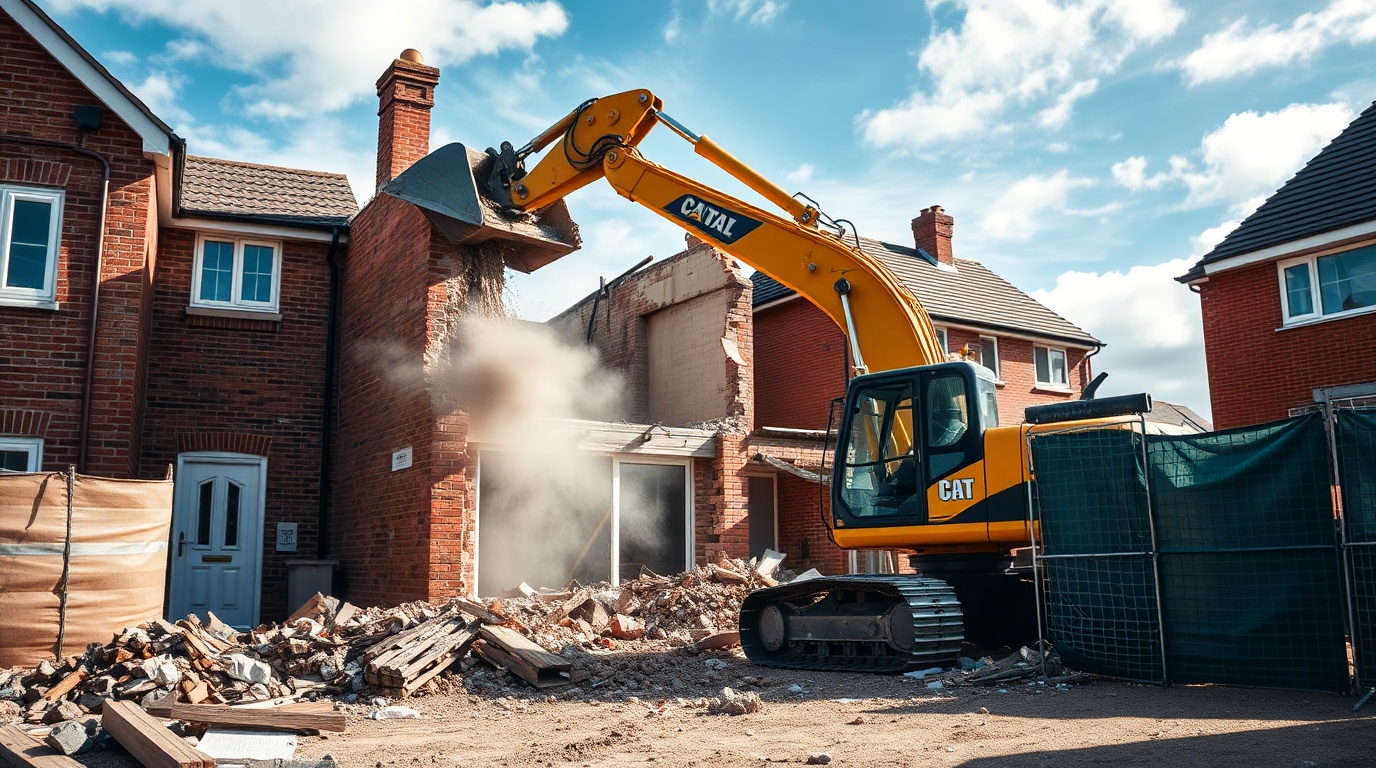
A refurbishment and demolition survey is an intrusive asbestos survey carried out before a building is significantly refurbished or demolished, to locate and identify asbestos so it can be removed safely. It is one of the two main survey types described in HSE guidance, the other being a management survey. Unlike a management survey, which keeps disturbance to a minimum in an occupied building, the refurbishment and demolition survey is fully intrusive: the surveyor opens up structures and inspects areas that the work will disturb. Samples are analysed by a UKAS-accredited laboratory, and the report records the location, type and condition of any asbestos found. It supports the duties under the Control of Asbestos Regulations 2012 (CAR 2012) and is the type used before demolition.
There are two recognised asbestos survey types in the UK, and choosing the right one matters. The refurbishment and demolition survey is the thorough, invasive one used when a building is going to be disturbed. This page explains exactly what it is.
Key facts
- Used beforeRefurbishment or demolition
- Survey styleFully intrusive
- Other typeManagement survey
- Sample analysisUKAS-accredited lab
- SupportsCAR 2012 duties
What the survey is for
A refurbishment and demolition survey is carried out where a building, or part of it, is going to be refurbished or demolished. Its purpose is to find all the asbestos that the planned work could disturb, so it can be removed before that work starts. Because demolition and major refurbishment break into the fabric of a building, the survey needs to reach the places that ordinary occupation never touches.
This is why the survey is intrusive. The surveyor will open up the structure as needed — lifting floors, removing panels, inspecting voids, ducts and ceiling spaces — to identify hidden asbestos-containing materials. The end product is a report that records where asbestos is, what type it is, and its condition, which then informs the removal plan and tells the demolition team what they are dealing with before they begin.
How it differs from a management survey
The HSE recognises two broad survey types, and they serve different situations. Understanding the difference avoids commissioning the wrong one:
- Management survey: used during the normal occupation and use of a building. It aims to locate asbestos that could be disturbed during everyday activities and to manage it where it is, with minimal disturbance. It is not designed for buildings about to be demolished.
- Refurbishment and demolition survey: used before refurbishment or demolition. It is fully intrusive and aims to find all asbestos in the areas to be worked on, so it can be removed first.
The table below summarises the practical differences. The key point is that demolition always calls for the refurbishment and demolition type, because the whole building is going to be disturbed.
| Management survey | Refurbishment & demolition survey | |
|---|---|---|
| When used | Normal occupation | Before refurb / demolition |
| Intrusion | Minimal disturbance | Fully intrusive |
| Building state | Occupied / in use | Usually vacated for the area |
| Aim | Manage asbestos in place | Locate all asbestos to remove |
| Suitable for demolition? | No | Yes |
Indicative comparison based on HSE guidance. The appropriate survey type depends on the work planned; take competent advice.
What happens with the survey results
The survey report is the basis for managing asbestos safely before demolition. Once it is complete:
- any asbestos-containing materials are removed before the main demolition, in line with the Control of Asbestos Regulations 2012;
- the work is divided into licensed and non-licensed tasks depending on the type and condition of the asbestos;
- licensed removal is carried out by a contractor holding the relevant HSE licence, while certain lower-risk work can be non-licensed but still controlled; and
- waste is disposed of as hazardous waste through licensed routes, with the appropriate documentation.
Samples taken during the survey must be analysed by a UKAS-accredited laboratory so the identification is reliable. A thorough, correctly scoped survey at the outset reduces the risk of unexpected asbestos halting the job later and helps keep workers and the public safe throughout the demolition.
Why the survey must be intrusive for demolition
The intrusive nature of the survey is not incidental — it is the whole point when a building is to be demolished. Asbestos is frequently hidden in places that everyday use never reaches, and demolition will disturb all of them. An intrusive survey is needed to reach areas such as:
- Voids and cavities behind walls, above ceilings and below floors;
- Service ducts and risers where lagged pipework may run;
- Behind panels and claddings that conceal insulating board;
- Structural elements that may carry sprayed coatings.
A non-intrusive survey, such as a management survey, deliberately avoids opening these areas up so it can be done while a building is occupied. That is appropriate for keeping asbestos managed in place, but it is not suitable before demolition, because it can leave hidden asbestos undiscovered. Since demolition disturbs the entire structure, the survey has to look everywhere the work will reach — which is why it is destructive where necessary and why the area is usually vacated for it.
Choosing the right survey and surveyor
Getting the survey right depends on commissioning the correct type and using competent people. A few points help:
- Match the survey to the work: for demolition or major refurbishment, the refurbishment and demolition survey is the appropriate type; a management survey is not designed for this.
- Use a competent surveyor: the surveyor should be competent and the work carried out to recognised standards, because the survey drives decisions about removal and licensing.
- Insist on UKAS-accredited analysis: samples must be analysed by a UKAS-accredited laboratory so the results are reliable.
- Scope it fully: make sure the survey covers all areas the demolition will disturb, with safe access arranged, so nothing is left uninspected.
A well-scoped survey by competent professionals gives a dependable picture of the asbestos in a building before it is taken down. That information underpins the safe removal of asbestos and the lawful conduct of the demolition, which is why the refurbishment and demolition survey is treated as an essential first step rather than a formality.
Where the survey sits in the project
Because the refurbishment and demolition survey drives what asbestos must be removed and how, it belongs near the very start of a project rather than partway through. Seeing where it fits helps explain why it should be commissioned early:
- Before the work is detailed: the survey is arranged ahead of finalising the demolition method, so its findings can shape how the building is taken down.
- Ahead of removal: the report determines what asbestos is present and how it is classified, which in turn sets the removal plan and whether licensed work is involved.
- Alongside the other steps: it runs in parallel with serving the Section 80 notice, arranging utility disconnections and planning the work under CDM 2015.
- Before mobilising: any asbestos identified is removed under controlled conditions before the main demolition begins.
Leaving the survey late, or skipping it, is the usual reason asbestos is found mid-demolition — at which point work has to stop and the area may be contaminated. Treating the survey as the first move for any building that might contain asbestos keeps the project ordered. It is also why the survey is intrusive and thorough rather than quick and superficial: the whole point is to find everything the demolition will disturb, so the removal that follows is complete and the building can be taken down safely and lawfully.
Frequently asked questions
Is a refurbishment and demolition survey always intrusive?
Yes, by design. Because the building or area is going to be disturbed, the survey opens up structures to find hidden asbestos that a non-intrusive survey would miss. The area is usually vacated for the work, as the inspection itself can disturb materials.
Who can carry out the survey?
A competent asbestos surveyor should carry it out, and samples must be analysed by a UKAS-accredited laboratory. Competence and accreditation matter because the survey drives decisions about removal and whether licensed work is needed, and unreliable identification can leave dangerous material in place.
Do I need this survey for a small demolition?
If the structure may contain asbestos and is going to be demolished, the principle still applies: identify asbestos before disturbing it. The scope can be proportionate to the building, but you should not assume a small or simple structure is asbestos-free. Take competent advice.
Sources & further reading
Figures on this page are typical UK ranges drawn from published sources and depend on your specific building. They are guidance, not a quotation.